
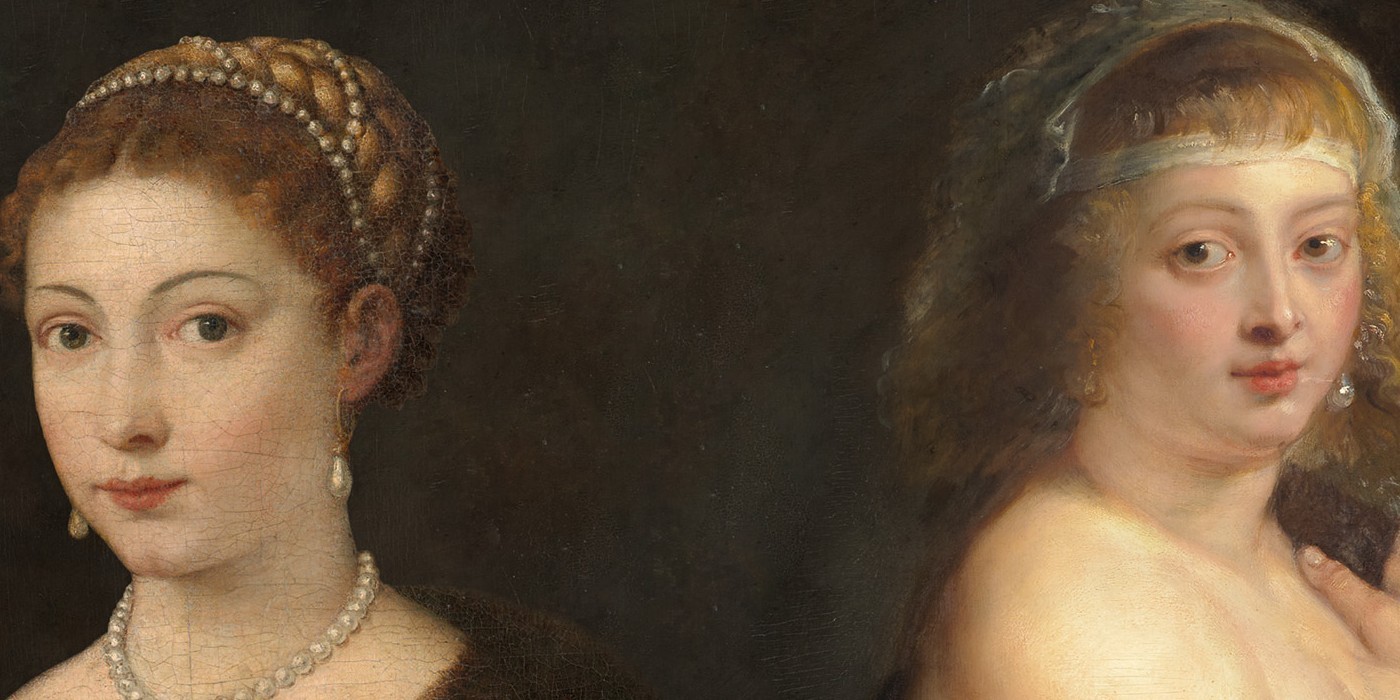
The catchwords ‘contest’ and ‘competition’ are nowadays associated principally with the economy, sport, evolution theory, architecture, or game shows of various kinds on television. In the early modern era, however, the principle of competition was fundamental to artistic endeavour. The prevailing view at the time was that the competitive sequence of imitation, emulation, surpassing (imitatio, aemulatio, superatio) resulted in progress. Here, as in so much else, antiquity was the point of reference.
This important theme is now at the heart of a major exhibition at the Kunsthistorisches Museum – the first of its kind – which shows artistic competition in many of its facets and extends from antiquity to the turn of the nineteenth century. Its scope is wide, ranging from the agon, that is, the fair, rules-based athletic contest of ancient Greece, to the carefully managed prize competitions at the academies and salons of the eighteenth century. Between these two poles, it covers various forms of early modern engagement with the ancient tropes of artistic competition, jealousy between artists, and competition at princely courts and on the art market.
While exhibitions have occasionally been devoted to the contest between the arts (paragone in Italian), none has ever dealt specifically with the competitive struggles that artists waged not only with one another but also with long deceased celebrities. These struggles gave rise to some of the best-known artworks of the Renaissance and Baroque.
Rivalry for prestigious commissions at times led to an aggressive atmosphere that opened up abysmal depths in human nature, such as artistic jealousy with all its attendant intrigues, sideswipes, and calumny. On the other hand, however, there were instances of collaboration, where specialists cooperated with one another to produce works that none of them could have created on their own.
Major works from international collections juxtaposed for the first time
The exhibition features around 120 major works dating from antiquity right through to the nineteenth century, including some sixty loans from international collections (works by artists such as Michelangelo, Tintoretto, Titian, Lavinia Fontana, Cellini, Rubens, and Van Dyck) and an equal number of outstanding works from the holdings of the Kunsthistorisches Museum. As an integral part of its concept, the exhibition traces a wide variety of artistic confrontations from antiquity until around 1800 and puts the rival works of yesteryear on display for present-day viewers to compare. Many of the paintings and sculptures selected are being shown in Austria for the first time, including numerous works that, true to the spirit of artistic competition, were originally intended to be compared with one another.
The remarkable loans are from such institutions as the Rijksmuseum in Amsterdam, the Louvre in Paris, the Uffizi in Florence, the Victoria and Albert Museum in London, the Vatican Museums, the Pinacoteca di Brera in Milan, the Palais des Beaux-Arts in Lille, the Staatliche Kunstsammlungen Dresden, the Academy of Fine Arts and the Albertina in Vienna, the Liechtenstein Princely Collections, and the Nelson-Atkins Museum of Art in Kansas City, as well as from private lenders.
Gudrun Swoboda
Driving Forces and Conditions of Artistic Contest
(from the exhibition catalogue “Idols & Rivals”)
The Dutch cultural historian Johan Huizinga regarded competition as a primordial and universal principle of culture. He described the ‘desire to challenge a rival to perform some difficult, seemingly impossible feat of artistic skill’, finding that it ‘lies deep in the origins of civilization’.
Huizinga was aware, of course, that this need could be quenched in different ways, depending on the historical conditions under which it tries to assert itself. We can illustrate this with two contrasting examples that also function as an introduction to the exhibition: in Europe, craftsmen and artisans were long organized in guilds designed to curb competition and its dynamic effects. In contrast, art academies welcomed contests and rivalry.
Even before the latter were founded from the mid-sixteenth century onwards, the idea had begun to take hold that the aim of art, if it differed from craftsmanship, was to realize exceptional works; and that the extraordinary arises wherever people vied with each another.
As early as 1455, the celebrated Italian humanist Lorenzo Valla had declared that artistic progress was the result of a mindset that aimed to imitate, emulate, and surpass its models (imitatio, aemulatio, and superatio).
It is not our intention, though, to elevate competition to a principle of cultural progress, however defined. Instead, we follow the thesis that different cultural realms can be characterized by how they deal with a (possibly universal) tendency to vie with others. This view forms the basis of both this catalogue and the exhibition.
It is well known that early modern European art, which is the main focus of the show, is closely related to the establishment of the competitive principle. Our aim is to distinguish the agonal driving forces of Renaissance and Baroque art and relate them to their complex historical conditions. These reference points for artistic competition in the early modern era include (1) opportunities and settings; (2) the criteria and standards asserted in a contest; (3) historical templates and resonance chambers; (4) iconographies of contest and competition developed in connection with them; (5) counter models, such as collaboration. They each deserve a closer look.
OPPORTUNITIES AND SETTINGS
There was probably never a time that offered artists more opportunities to vie with each other, and better conditions to do so, than the early modern era. In the catalogue as well as in the exhibition we explore some of the most important opportunities and settings (or venues) for such contests.
The competition held in 1401 for the bronze doors of the Baptistery in Florence, in which Lorenzo Ghiberti triumphed over Filippo Brunelleschi and five other rivals is significantly considered one of the events that mark the birth of Renaissance art. The decision of the jury (appointed by one of the city’s corporations) was based in part on aesthetic criteria. However, artists also vied with each other outside of the framework of such public competitions. A century later, the Florentine Republic commissioned both Leonardo da Vinci and Michelangelo to produce a large battle piece for the Salone dei Cinquecento in the Palazzo Vecchio, which left no one in doubt that their works would be compared. Rather than vying with each other in order to gain a commission as Ghiberti and Brunelleschi had done, Leonardo and Michelangelo had received a parallel commission that still inevitably set the two great masters against each other. Similar intentions were also pursued in courtly contexts. In the context of the exhibition, a good example are the works Emperor Rudolf II commissioned from various artists, some of whom he had called to his court in Prague. The emperor wanted to be able to look over their shoulder and observe them compete with each other.
Civic or princely commissions and work situations conceived as competitions or rivalries became the norm for artistic production from the fifteenth century onwards, if not earlier. In the eighteenth century, the flourishing art academies offered new opportunities for competitions. Prizes were now awarded with the declared intention of fostering rivalries among the members. In addition, academies organized new types of regular public exhibitions, offering artists a stage on which they competed before a steadily growing bourgeois audience. A reality at work behind such events, which grew in importance from the seventeenth century onwards and would eventually dominate all artistic production, was the art market.
CRITERIA AND STANDARDS
Hand in hand with the establishment of agonal production conditions, which began in the fifteenth century, went the evolution of a rich and varied terminology of art theory and critique.Terms such as ‘drawing’, ‘colouring’, ‘expression’, etc. made it possible not only to judge individual works but also to distinguish and compare the advantages and weaknesses of the artists compared.
At the same time, the paragone debate – cultivated primarily, though not exclusively, in Italy – created the conceptual basis for critically comparing works of different arts, especially painting and sculpture. The competition between artists could thus also be staged in the form of a competition between the arts. As is well known, this paragone comprised all the ‘difficult, seemingly impossible feat of artistic skill’ (Huizinga) that a sculptor, for example, faced when trying to create painterly effects, or a painter attempting to show figures seen from more than one viewpoint, that is, like a sculpture.
Unlike the criteria used for evaluation, standards of artistic competition were not merely conceptual: they had also been established by exceptional works and revered masters. For a long time, Michelangelo, whose oeuvre represents the apex of Giorgio Vasari’s art history, remained the benchmark. Painters from Titian through Carracci and Valentin to Rubens referenced Michelangelo in the context of their own works in order to imitate him in some way or perhaps even surpass him.
HISTORICAL TEMPLATES AND RESONANCE CHAMBERS
The case of Michelangelo as an exemplary artist who was elevated to function as a template for later generations is instructive for another reason. It demonstrates that artists vied not merely with their contemporaries but that this rivalry contained an important historical dimension, too. They were also in competition with the leading protagonists of art history – in a strangely onesided way, because while it was possible to feel challenged by the works of (long-) dead masters, these masters were no longer in a position to respond in turn.
Vying with canonical templates was a way of experiencing and actively participating in art history. From the fifteenth century onwards, the historical models and resonance chambers available for this purpose have been described in ever-greater detail, while being disseminated and made accessible through novel reproduction techniques. This historical dimension of artistic competition reached back to ancient Greece, to artists like Phidias, Zeuxis, and Apelles, whose competitive attitude was renowned and whose works were regarded as exemplary even if they were only known from descriptions and anecdotes.
ICONOGRAPHIES OF CONTEST AND COMPETITION
Considering how important the implementation of a competitive approach was to early modern art, it is not surprising that this period also devised iconographies of contest. They fed on ancient myths such as the story of the (somewhat unfair) competition between Apollo and Marsyas and, even more importantly, on a number of anecdotes recorded by Pliny the Elder that recalled how Greek painters and sculptors tried to surpass each other in imitation of nature, the deception of the eye, and other artistic skills. Early modern art is rich in allusions to these anecdotes; they often functioned as an opportunity to compete with the ancient masters and become a ‘second’ Zeuxis or Apelles. Competition in antiquity thus evolved into a competition with antiquity.
Attempts to allegorically depict artistic contests as such (including the prizes promised to the winner) date from the eighteenth century. Tellingly, we find impressive examples among works produced in the academic milieu.
COLLABORATIONS
However, artists depicted not only the promise of glory but also the dark side of artistic rivalry. This is especially true of envy and jealousy among artists, which is repeatedly discussed in art literature. Many – if not all – of those involved were aware of the fact that the dividing line that separated productive competition from destructive rivalry, perhaps even a fight to the death, could never be determined with certainty. It is no coincidence that Eris, the fleetfooted Greek goddess of competition, was also, even primarily, the goddess of strife and discord.
Envy and rivalry among artists juxtapose various forms of collaboration. On the one hand, specialists collaborated in order to produce works neither painter could have created alone. On the other hand, a number of artists led large workshops where division of labour was the order of the day. Rubens’s large and well-run studio was extremely successful in its quest for fame and domination of the art market.
Here, as in comparable cases, division of labour did not necessarily mean joint authorship. In contrast, both the catalogue and the exhibition are excellent examples not only of shared work but also of multiple authorship. I would like to use this opportunity to thank all colleagues and friends involved for their academic, practical, and moral support. Without their help and enthusiasm, this project would not have been realized – and Eris would have triumphed!