
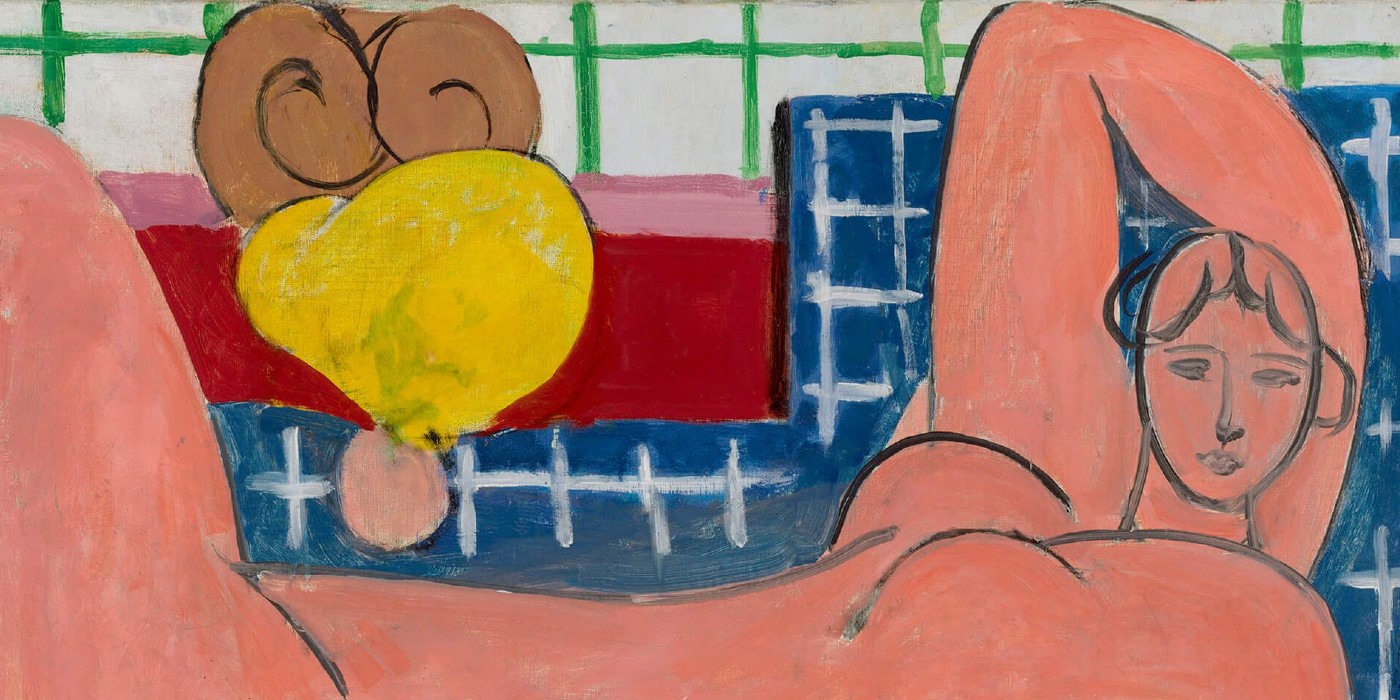
Matisse in the 1930s will provide visitors with a rare opportunity to experience the very process through which the French artist generated a remarkably new creative approach and outlook in the later part of his career. It will trace the dramatically revitalized production – a powerful renewal- that followed from Matisse’s eventful visit to Philadelphia in 1930. Organized in collaboration with the Musée de l’Orangerie in Paris and the Musée Matisse Nice, this exhibition will present 143 works, drawn from public and private collections in the United States and Europe and ranging from both renowned and rarely seen paintings and sculptures, to drawings and prints, to illustrated books. The exhibition will address the working methods that invigorated Matisse’s style during this time, as well as his modern renderings of mythological themes from antiquity, and his depictions of female models in the studio, including his muse and studio assistant Lydia Delectorskaya. It will also feature rare documentary photographs and films.
About Matisse in the 1930s
By 1930, Henri Matisse (1869–1954) had achieved significant international renown, even appearing on the cover of Time magazine, and yet he found himself in a deeply troubling creative slump. A dozen years before, he had switched his base of operations from Paris to Nice. There he had focused on the theme of female models in elaborately decorated studio setups bathed in the unvarying, crystalline light of the Mediterranean. Faced with the seductiveness of that body of work, some critics wondered whether Matisse, who had been such a radical force in modern painting, had lost his experimental edge. By the later 1920s, Matisse himself had developed second thoughts, and for a couple years he produced nearly no new paintings. The turning point came in the fall of 1930, when the artist visited the Barnes Foundation in the suburbs of Philadelphia and received the commission for a three-part mural, The Dance (1930-1933). Matisse used this commission to turn his work around. Afterward, he returned to easel painting with new procedures and a new approach. He started using photography systematically to document the cumulative process of building his motifs and to test his own reactions as he went along. He also began using pre-colored cut papers to plan his compositions; this procedure led him away from the illusion of modeling and deep space and toward a style of flat tones and bold shapes that gave his compositions of the 1930s a new impact. In Matisse in the 1930s, the story unfolds chronologically and thematically with a prologue followed by five major sections and an epilogue centered on a new turning point in the artist’s life.
Curators
The exhibition was curated by Matthew Affron, Muriel and Philip Berman Curator of Modern Art at the Philadelphia Museum of Art; Cécile Debray, president of the Musée National Picasso-Paris; and Claudine Grammont, director of the Musée Matisse Nice.
Organization
Matisse in the 1930s is organized by the Philadelphia Museum of Art; the Musée de l’Orangerie, Paris; and the Musée Matisse Nice.