Of Genoese origin but trained in Milan in Filippo Abbiati’s workshop (1640-1715), Alessandro Magnasco (Genoa, 1667 – 1749) was influenced from an early stage by Lombard art, where the emphasis on chiaroscuro and colours differed from the lively palette used by Genoese artists. However, his vibrant, touching style can be compared with the sketches of the Baroque period and particularly with Valerio Castello’s small-scale works but also with those by Bernardo Strozzi and Giovanni Battista Carlone, thus highlighting a cultural contradiction inherent in his training that is still difficult to trace. The artist’s catalogue also reveals mutual influences with the Venetian artist Sebastiano Ricci, who first worked with Antonio Francesco Peruzzini and was in turn influenced by the Genoese artist. Magnasco’s distinctive style is evident in the way he tackles the figures, rendered with rapid brushstrokes and darting flashes of light.
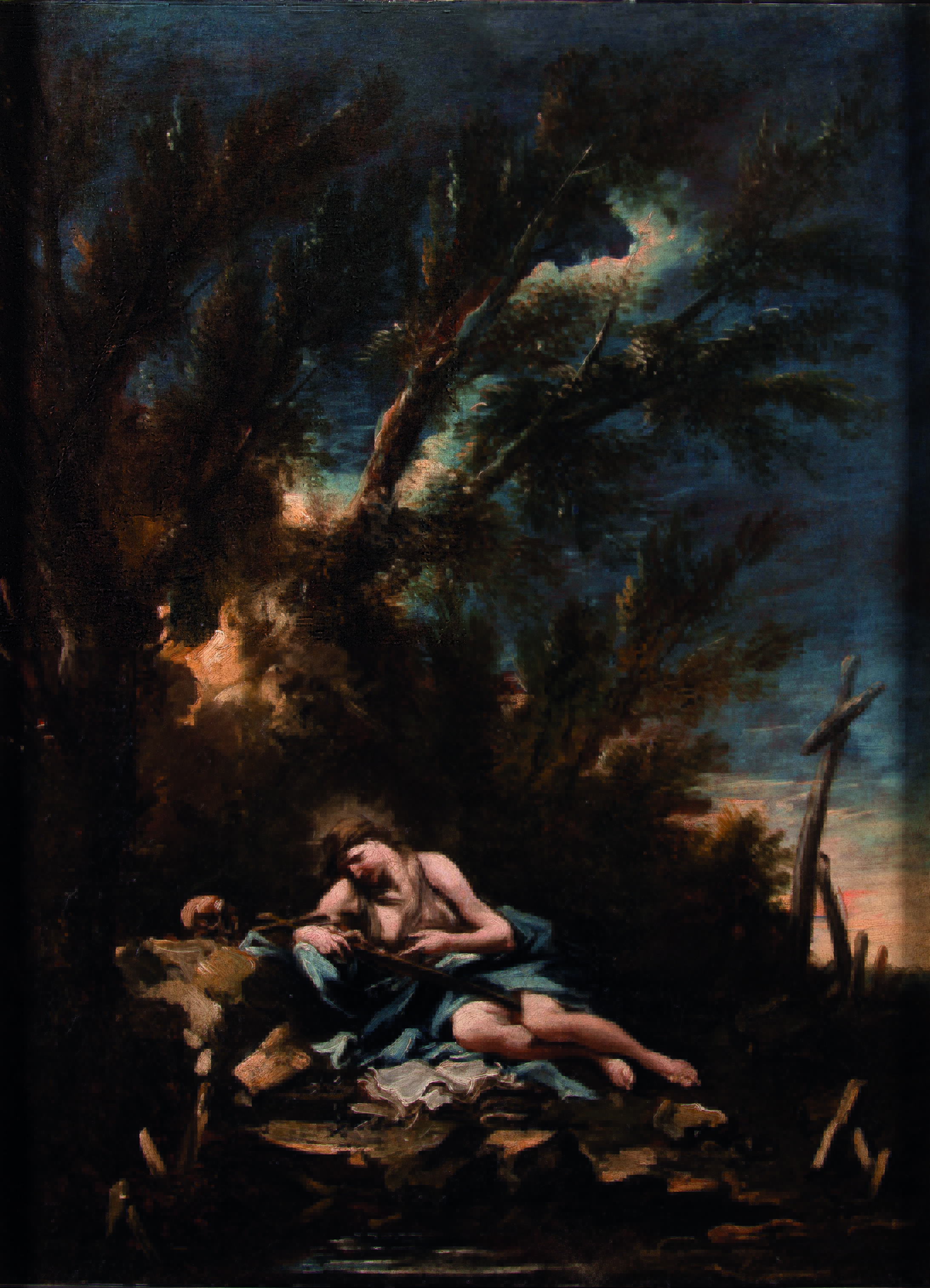
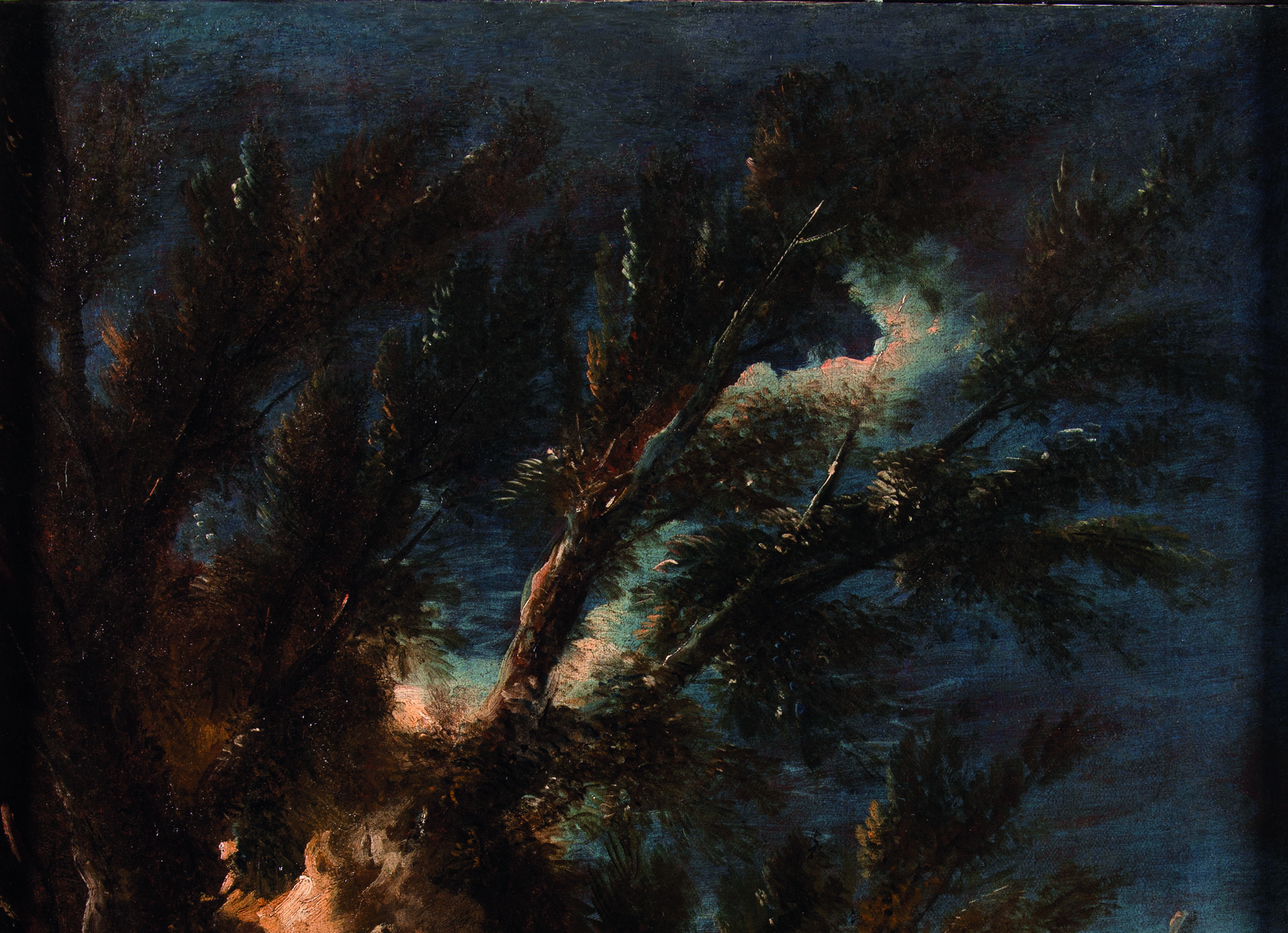
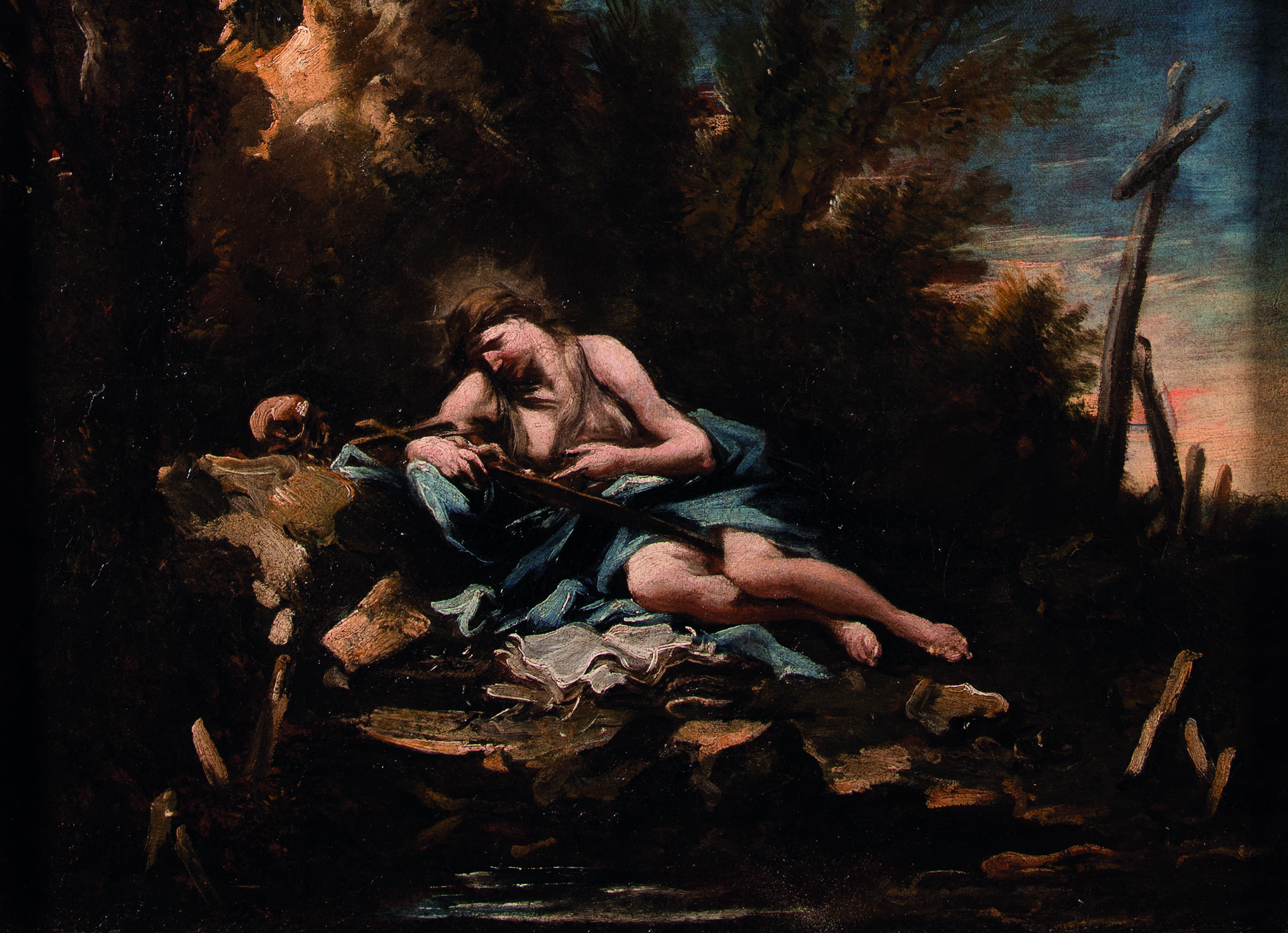
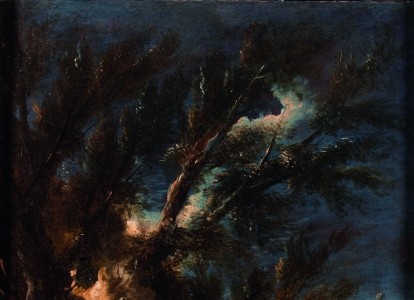
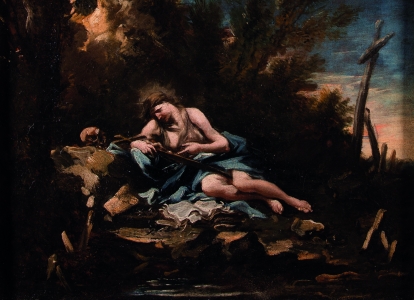
An intense “Magdalene” painted by Magnasco together with Antonio Francesco Peruzzini (Ancona, 1643 or 1646 – Milan, 1724) – who worked with him for thirty years beginning at the court of the Grand Prince of Tuscany during the last five years of the 17th century and continuing until the beginning of the 18th century – led to an extraordinary union, revealing a convergence of intentions that revealed disconcerting modern results. Peruzzini was, as Mina Gregori said, “the most original and innovative landscape painter to emerge at the end of the 17th century”, by virtue of his disruptive detachment from the classicist habit. He will be featured in the catalogue of the auction of 15 March 2022 dedicated to Old Masters and 19th century paintings, to be held in the sumptuous Palazzo del Melograno in Genoa, with a starting price of 15, 000 – 25,000 euro.
The fluid and expressive style gives energy and tension to his creations, as this splendid canvas shows. Here, the figure of Mary Magdalene can be considered among the best examples. The high level of quality is in turn confirmed by its excellent state of conservation, which highlights its value and chromatic preciousness. The work is accompanied by a critical file by Fausta Franchini Guelfi.